

Disable XML-RPC-API
v2.1.7Amin Nazemi · 2020年10月1日 上架
A simple and lightweight plugin to disable XML-RPC API, X-Pingback and pingback-ping in WordPress 3.5+ for a faster and more secure website
- 正在使用
- 10 万+
- 评分
- 4.2 / 5
- 累计下载
- 84 万
- 最近更新
- 2026年2月4日
贡献者
 Amin Nazemi
 Neatma
截图
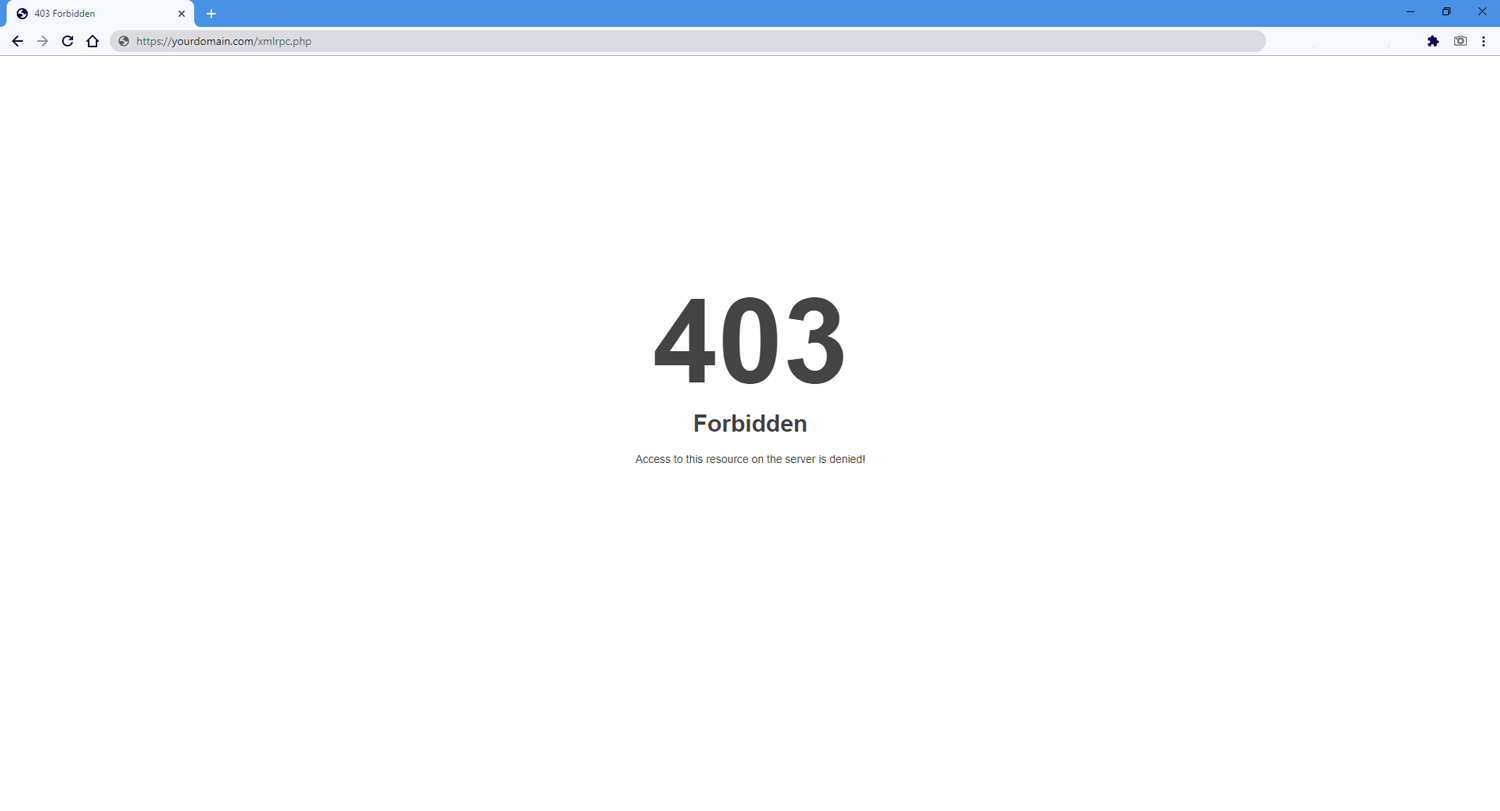
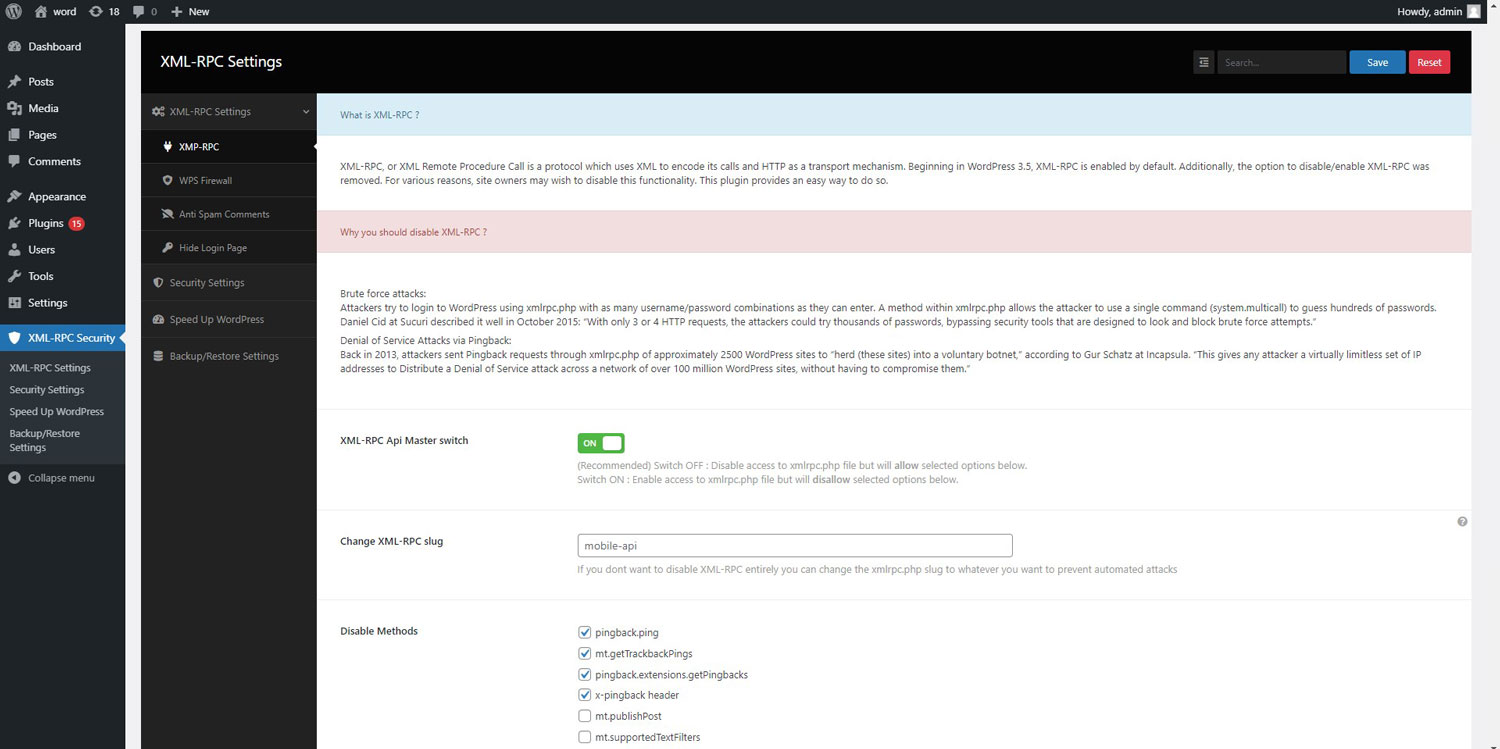
Protect your website from xmlrpc brute-force attacks,DOS and DDOS attacks, this plugin disables the XML-RPC and trackbacks-pingbacks on your WordPress website.
PLUGIN FEATURES
(These are options you can enable or disable each one)
- Disable access to xmlrpc.php file using .httacess file
- Automatically change htaccess file permission to read-only (0444)
- Disable X-pingback to minimize CPU usage
- Disable selected methods from XML-RPC
- Remove pingback-ping link from header
- Disable trackbacks and pingbacks to avoid spammers and hackers
- Rename XML-RPC slug to whatever you want
- Black list IPs for XML-RPC
- White list IPs for XML-RPC
- Some options to speed-up your wordpress website
- Disable JSON REST API
- Hide WordPress Version
- Disable built-in WordPress file editor
- Disable wlw manifest
- And some other options
What is XMLRPC
XML-RPC, or XML Remote Procedure Call is a protocol which uses XML to encode its calls and HTTP as a transport mechanism.
Beginning in WordPress 3.5, XML-RPC is enabled by default. Additionally, the option to disable/enable XML-RPC was removed. For various reasons, site owners may wish to disable this functionality. This plugin provides an easy way to do so.
Why you should disable XML-RPC
Xmlrpc has two main weaknesses
- Brute force attacks:
Attackers try to login to WordPress using xmlrpc.php with as many username/password combinations as they can enter. A method within xmlrpc.php allows the attacker to use a single command (system.multicall) to guess hundreds of passwords. Daniel Cid at Sucuri described it well in October 2015: “With only 3 or 4 HTTP requests, the attackers could try thousands of passwords, bypassing security tools that are designed to look and block brute force attempts.” - Denial of Service Attacks via Pingback:
Back in 2013, attackers sent Pingback requests through xmlrpc.php of approximately 2500 WordPress sites to “herd (these sites) into a voluntary botnet,” according to Gur Schatz at Incapsula. “This gives any attacker a virtually limitless set of IP addresses to Distribute a Denial of Service attack across a network of over 100 million WordPress sites, without having to compromise them.”