
CloudScale Cyber & DevTools
v1.10.1157andrewjbaker · 2026年10月28日 上架
Secure your WordPress site without an IT team. Free firewall, two-factor, passkeys and AI audits, with plain-language insights and simple fixes.
- 正在使用
- 10+
- 评分
- 5.0 / 5
- 累计下载
- 1,375
- 最近更新
- 2026年11月13日
贡献者
 andrewjbaker
截图
You do not need an IT team to secure your WordPress site. CloudScale Cyber & DevTools does that job for you. It puts the layers banks rely on in front of your site, free, stops the attack, says in plain language what is wrong, and gives you simple steps to fix it.
Why this matters now
Attackers do not choose targets. Scanners probe every site for flaws published hours earlier.
- 11,334 new WordPress vulnerabilities were published in 2025, up 42% in a year. 91% were in plugins and 9% in themes.
- 46% had no fix from the developer when they went public, so updating alone is not enough.
- 5 hours is the median time to first exploit for the most attacked flaws.
- 26% of attacks were stopped by hosting defences in a test of popular hosts, so your host alone is not enough.
- 573,000 infected sites were counted in one quarter on one vendor’s network, Q2 2026, alongside 18.2 billion blocked password-guessing attempts.
Nobody counts every hacked site, so these are what two security vendors measured: Patchstack, State of WordPress Security in 2026 and Wordfence Intelligence. A hacked site can be blacklisted, used to send spam or used to steal visitors’ data, and cleaning up costs far more than preventing it.
No IT team needed
- Insights, not jargon. Each finding says what is wrong, why it matters on your site, and what to do. The Home tab ranks everything worst first and links straight to the control that fixes it.
- Simple steps. Most fixes are one click, with undo. Where a fix belongs on the server, you get one block to paste, and a guide to opening your hosting panel’s terminal, or a button that sends the steps to your host.
- It watches for you. When a flaw is published in something you have installed, you hear by Telegram, email or webhook, with what to do.
- It is yours. It runs inside WordPress on your own server. Nothing leaves your site until you turn on a feature that needs it.
Technically deeper: proof, not a checklist
- It proves what it finds. Optional Active Verification sends safe test requests to your own site to show whether a flaw is reachable, and each scan is compared with the last so you can see a fix worked.
- AI that cannot talk it out of a risk. AI triage separates real risks from false alarms in plugin code, but it cannot clear the dangerous classes of finding.
- A firewall tested on every release. Each build runs the rules against 143 attack requests, all of which must be caught, and 142 ordinary ones, none of which may be refused.
- Protection before the update exists. CVE Shields, and signed virtual patches where one has been published, cover a flaw until you can update.
- It checks the ground truth. Files are compared with official checksums, and your database is scanned for hidden malicious code.
- Defence in layers. Login, application, Cloudflare edge and an optional OWASP Core Rule Set gateway.
How you use it
- See where you stand. Open Cyber & Devtools in the admin menu. Home shows a setup checklist and what needs attention, worst first, each linked to its fix.
- Protect the login first, the most attacked part of any site. On Login Security, turn on two-factor or passkeys for administrators and move the login address.
- Turn on the firewall safely. Start the firewall in Log only and watch what it would have refused on your real traffic. When that looks right, switch it to Block.
- Run an audit. Site Audit checks configuration, database and plugin health. Most findings have a one-click Quick Fix you can undo, or a Fix Recipe with exact commands.
- Let it watch. Turn on CVE Alerts and connect Telegram, email or a webhook to hear about a new flaw in something you run, with what to do.
What happens when a new flaw is published
Say a flaw is published in a plugin you use before an update reaches you. The daily check alerts you. CVE Shields close the plugin’s anonymous endpoints until you update, and a signed virtual patch, where one exists, refuses the attack. After the update, Upgrade Verification checks the site works and File Integrity confirms the files match the release.
Stop attacks before they do damage
- Request Firewall: blocks SQL injection, cross-site scripting, code execution and malicious uploads early. Starts in Log mode.
- Virtual Patching: narrow, signed rules that block a published flaw in an installed plugin or theme until you update. Few flaws have one yet.
- CVE Shields: close a vulnerable plugin’s anonymous endpoints until the fixed version is installed, then lift themselves.
- IP Reputation, Rate Limiting and Country Blocking shut out known bad traffic and floods.
- Fake Crawler Check: proves that a visitor claiming to be Googlebot or Bingbot really is, with no delay for visitors.
- Content Security Policy: start in Report-Only, see what real browsers would have blocked, and allow a source with one click.
- Comment Guard keeps comment spam out.
- Edge WAF Push sends the addresses you block to Cloudflare, so they are refused at the edge.
- Edge Gateway (optional): the OWASP Core Rule Set in front of your web server, on the same server, with no DNS change. If it stops, traffic goes back to the web server.
Hear about it first, with the fix
- Vulnerability feed: daily checks of your plugins, themes, core and server software.
- PHP Advisory Alerts: warn you that a PHP security release is coming, and say whether your server is affected.
- Certificate Expiry Warning: flags a certificate before it lapses.
- Alerts by Telegram, email or webhook.
- Quick Fixes: one-click hardening with undo.
- Fix Recipes: the exact commands to run, bundled in the plugin and never downloaded, so what you run is what shipped.
Lock down every login
- 2FA by authenticator app or email, and passkeys with Face ID, Touch ID or Windows Hello. You can make it mandatory for administrators.
- A hidden login address, lockouts and breached-password checks that never send the password.
- Emergency Lockdown: one switch for when someone may already be in. It stops new administrators, plugin changes and application password logins, and signs other administrators out.
- A documented way back in if you are ever locked out, from a wp-config.php safe mode to WP-CLI commands.
Prove your site is clean
- File Integrity: compares every core and WordPress.org plugin file with the official checksums, with repair and quarantine.
- Database malware scan looks for malicious code hiding in your database, where a file scan cannot see it.
- Upgrade Verification: after any change to WordPress, PHP, a theme or a plugin, it checks that the front page, login, REST API and admin still work.
- Threat Monitor, Persistence Watch, Activity Log and Live Traffic show what is changing and who is knocking.
AI that reviews your site like a penetration tester
- AI Cyber Audit: reviews your configuration, plugins, users, headers, DNS and TLS, then scores each finding and ranks what to fix first.
- Deep Dive: adds live checks and AI triage of suspicious plugin code, separating real risks from false alarms.
- Active Vulnerability Verification (optional, subscription): safe test requests to your own site, weekly or on demand, prove whether a flaw is reachable and that a fix worked.
- Use your own Anthropic Claude, Google Gemini or OpenAI key, including Gemini’s free tier, or choose Managed AI and hold no key at all.
Why people choose it
- Every protection layer is free. Two-factor, passkeys, the firewall, virtual patching and country blocking are not held back for a paid tier.
- It never acts behind your back. Nothing deletes or deactivates a plugin, and fixes are yours to apply and undo.
What is paid
Only two things, and both are optional. Managed AI is about $10 USD a month through PayPal if you would rather not hold an API key. Active Vulnerability Verification needs the same subscription. Everything else is free.
Developer tools included
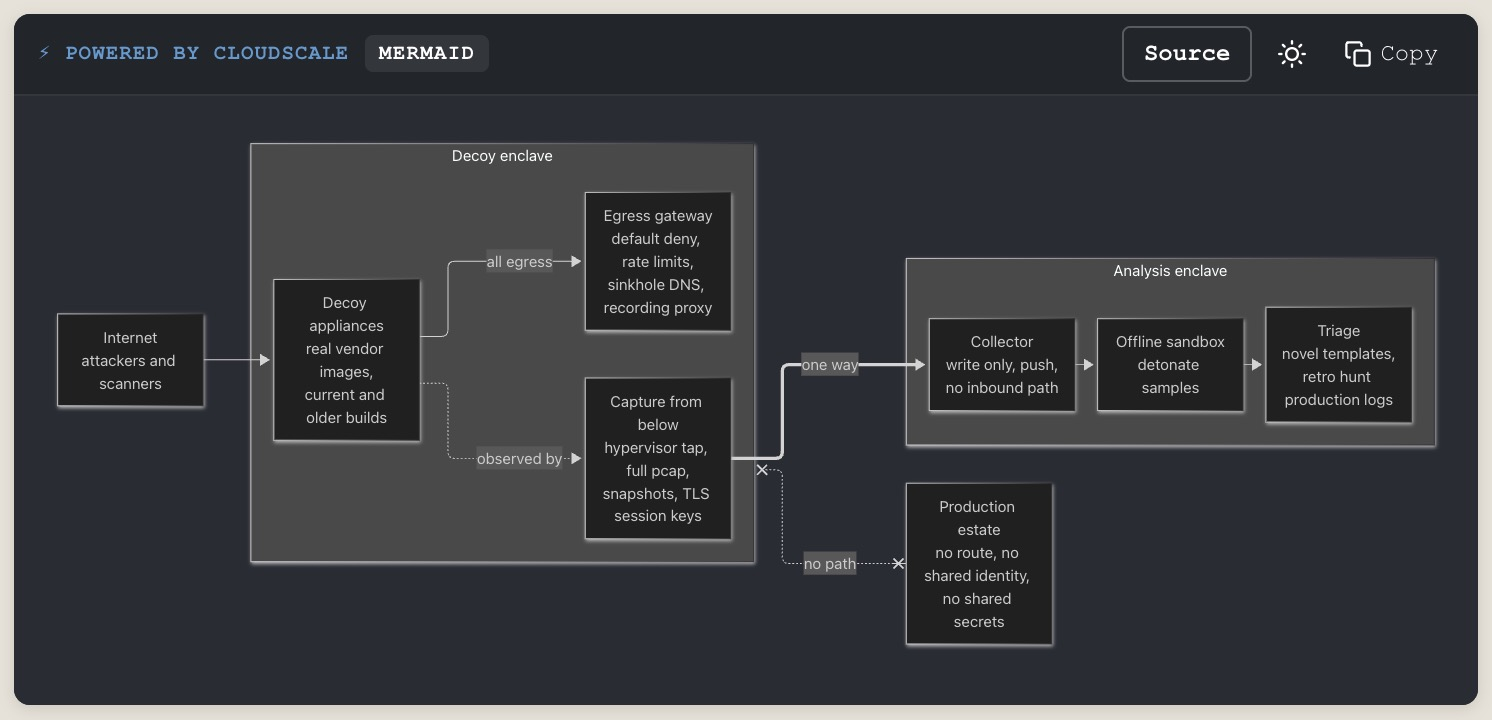
- Code block with syntax highlighting, Mermaid diagrams and charts, all served from your own site.
- Export to PDF, SMTP Mail, Server Logs, Performance Monitor, and a SQL Query Tool.
External services
Nothing below is contacted on a default install: each service stays idle until you configure or click something. API keys are your own and go only to that service. Unless an entry says otherwise, no post content, visitor data, database contents, passwords or credentials are sent. A visitor’s page load triggers nothing except Telegram alerts you set up. Full reference
WordPress.org (integrity checks)
Service: WordPress.org. Endpoints: api.wordpress.org/core/checksums/1.0/, /plugins/info/1.0/ and /1.2/; downloads.wordpress.org plugin-checksums/, theme/, and on Repair only release/ and plugin/ zips. Data sent: WordPress version and locale, or a slug and version. When: A File Integrity check, Site Audit scan or Update Risk run. Privacy (no separate terms are published)
CloudScale lookups and data lists
Service: CloudScale Consulting, the plugin author. Endpoints and data sent, on api.cloudscale.consulting: Privacy · Terms
- /whoami: plugin name and version. At most daily after you turn on CVE Alerts (Security tab), or on Check my address.
- /vuln-lookup and /v1/software-releases: one component per request, never your hostname, site URL or plugin list. During a scan you start, and daily once CVE Alerts is on (Security tab).
- /v1/pwned-range/: the first 5 hex characters of the password’s SHA-1 hash, never the password. On setting a password, if you choose Warn or Block.
- /v1/php-advisories, /ip-reputation-feed, /v1/virtual-patches and /v1/plugin-models: nothing. Hourly at most, once the matching feature is on.
- Those feeds (not /v1/pwned-range/) add a random daily number to count sites, identifying nobody.
- /v1/usage/checkin: weekly after Yes to the optional community: random id, site address, versions, setup date, last admin visit, protections on. Leaving erases all.
- /v1/usage/leave: an optional deactivation reason.
- /remediation-event and /remediation-plan: licence key, versions, recipe or failed check ids. If you opt in to recipe usage or ask CloudScale for a fix order. The reply is never code.
CloudScale Managed AI and Active Verification (paid, optional)
Service: CloudScale Consulting. Endpoints: on api.cloudscale.consulting: /v1/messages, /v1/messages-async, /v1/images, /v1/openai-chat, /nuclei-scan, /checkout, /checkout-start, /status, /cancel, /refund-request, /recover, /recover/verify, /contact, /billing-portal, /manage. Data sent: AI features: as the AI providers below. Billing and messages: email address, site URL, message, any PayPal reference. Active Verification: the domain and a scan id; CloudScale then sends real HTTP requests to your site. Every request carries your licence key, plugin name and version. Never your own API keys. When: An AI feature with Managed AI on, or a billing, message or verification button; with a licence key, status at most every 10 minutes and Active Verification weekly unless unticked. Privacy · Terms
AI providers (optional, your API key)
Service: Anthropic (Privacy, Terms), Google Gemini (Privacy, Terms) or OpenAI (Privacy, terms at openai.com/policies/terms-of-use/). Endpoints: api.anthropic.com/v1/messages, generativelanguage.googleapis.com/v1beta/models/, api.openai.com/v1/responses and api.openai.com/v1/images/generations. Data sent: AI audits: site URL; plugin, theme, PHP and server versions; security settings and check results; usernames of administrators with a weak login or no two-factor; for the deep dive, flagged PHP snippets and file paths. Site Audit: sample post titles and URLs. Site Optimizer: DB table and column names, or text you paste. Images: post title and summary. When: An AI-labelled button, “Test connection” or a scheduled scan you enabled, to the provider you selected.
Cloudflare API (optional: cache purge, rate limit, edge blocking)
Service: Cloudflare, Inc. Privacy · Terms. Endpoints: api.cloudflare.com/client/v4/ips and /zones (purge_cache; /rulesets/phases/http_ratelimit/entrypoint, /rulesets/{id}/rules/; /firewall/access_rules/rules). Data sent: Nothing for the address list; otherwise your API token, plus URLs to purge, a rate-limit rule, or blocked IPs. When: Weekly if Cloudflare is your Visitor IP Source; with a zone ID and token, on publish or by button; Edge WAF Push every 5 minutes.
Other optional services
- Service: PayPal Privacy · Terms. Endpoints: api-m.paypal.com (or api-m.sandbox.paypal.com): v1/oauth2/token, v2/checkout/orders, v1/billing/subscriptions/ID; www.paypal.com/sdk/js. Data sent: Email address, amount, a reference and return addresses. When: You start or check a subscription.
- Service: Telegram Privacy · Terms. Endpoints: api.telegram.org, sendMessage and getUpdates. Data sent: Alert text and your site URL; alerts can include PHP errors, the username tried, IP address, country, request path, user agent and scan summaries. When: An enabled alert fires.
- Service: Wordfence Privacy · Terms. Endpoint: www.wordfence.com/api/intelligence/v3/vulnerabilities/scanner. Data sent: Nothing about your site. When: A scan, if you added a key.
- Service: OpenStreetMap Privacy · Terms. Endpoint: tile.openstreetmap.org and its a, b, c subdomains. Data sent: Tile coordinates, plus the browser’s IP address and user agent. When: An administrator views the attack map.
- Service: DB-IP Privacy · Terms. Endpoint: download.db-ip.com (dbip-city-lite .mmdb.gz). Data sent: File request; no visitor IP. When: On “Download DB-IP Lite”, enabling Country Rules, then monthly.
- Service: GitHub (Privacy, Terms) and GitLab (Privacy, Terms). Endpoints: api.github.com and gitlab.com, or a self-hosted GitLab host you allow. Data sent: Repository owner, name, branch and file path. When: An editor links a file or clicks Sync; daily for linked blocks.
Addresses you set (your own endpoint)
Endpoints: Yours, never CloudScale: the uptime heartbeat URL, the alert webhook URL, csdt_fpm_probe_url and csdt_devtools_cf_origin_refresh_url. Data sent: Heartbeat: site URL, time, your token, plugin version and health signals. Webhook: signed JSON alerts. Others: a GET with your host name and page path. When: Every 5 minutes with the heartbeat on (also while deactivated if you install the loader), on an alert, FPM status view or Cloudflare purge.